Growth / Performance
Kalle Mobeck
•

B2B Content Syndication: A 2026 Lead Generation Playbook
B2B content syndication republishes gated, high-value content on third-party platforms, newsletters, or publisher networks to generate validated leads and extend reach beyond your owned channels. Done well, it delivers predictable cost-per-lead and measurable pipeline influence. Done poorly, it fills your CRM with recycled contact lists that your sales team learns to ignore within a quarter.
The strategy works because most B2B buyers no longer want a sales conversation before they’re ready for one. Gartner’s sales survey found that Most B2B buyers prefer a rep-free experience, which makes content-first discovery, not outbound calls, the front door to your pipeline. Syndication puts your best research, playbooks, and frameworks in front of buyers who are already self-educating on someone else’s platform.
Three signals tell you whether it’s worth testing:
Deal size: Average contract value above $10,000 typically justifies the cost per lead; sub-$1,000 ACV products rarely clear the math.
Content readiness: You need at least one asset with genuine proprietary data or a distinct framework, not a rebranded blog post.
Nurture capacity: You need a sequence and an SDR ready to work leads within 24 to 48 hours, or the leads go cold before they convert.
Key Takeaways
Content syndication turns third-party audiences into validated pipeline when the asset, the gating, and the sales handoff are all built with the same discipline.
Point | Details |
|---|---|
Match model to goal | Pay-per-lead suits volume; editorial and newsletter placements suit authority and warmer engagement. |
Vet before you spend | Ask for lead source transparency, sample leads, and a written replacement clause before signing. |
Gate for quality, not maximum fields | Ask only for fields that support real qualification; save deeper questions for nurture. |
Track four core KPIs | Cost per lead, MQL to SQL rate, pipeline influenced, and sales-accepted rate tell the real story. |
Consider a managed partner | Aligntcc runs syndication programs with separated AI research and repurposing pipelines and a built-in sales handoff SLA. |
Table of Contents
How Content Syndication B2B Campaigns Actually Run
Which Content Syndication Model Fits Your Program?
Which Assets Should You Syndicate, and How Should You Gate Them?
How Do You Vet a Content Syndication Partner?
What KPIs and Benchmarks Should You Track?
What Are the Biggest Content Syndication Risks?
How Aligntcc Approaches Syndication-Driven Programs
Timing Matters More Than Most Marketers Admit
Let Aligntcc Run the Program You Just Read About
Frequently Asked Questions
Sources
How Content Syndication B2B Campaigns Actually Run
A syndication campaign has four stages, and most failures trace back to skipping one of them to save time.
Build a syndication-ready asset. This isn’t a repackaged blog post. It’s original research, a benchmarking report, a step-by-step playbook, or a recorded webinar with a distinct point of view. The asset needs to justify a form fill on its own merits.
Choose your placement type. Options include a pay-per-lead platform’s content library, a native placement inside an industry newsletter, or an editorial partnership where a publisher’s own audience discovers your piece inside their normal content flow. Each mechanic reaches a different buyer mindset, which is why the promotion plan should get decided before the asset ships, not after. MQL Magnet’s distribution guidance makes the case for treating distribution as a planned discipline rather than an afterthought bolted onto a finished asset.
Capture, validate, and enrich the lead. Raw form fills need business email verification, firmographic matching against your ideal customer profile, and intent signal scoring before they ever touch your CRM. Skipping validation is the single most common reason syndicated leads get a bad reputation internally.
Hand off to nurture and sales with a clear SLA. A syndicated lead is colder than an inbound demo request. It needs a nurture sequence built for someone still in early research, plus an SDR follow-up window measured in hours, not days.
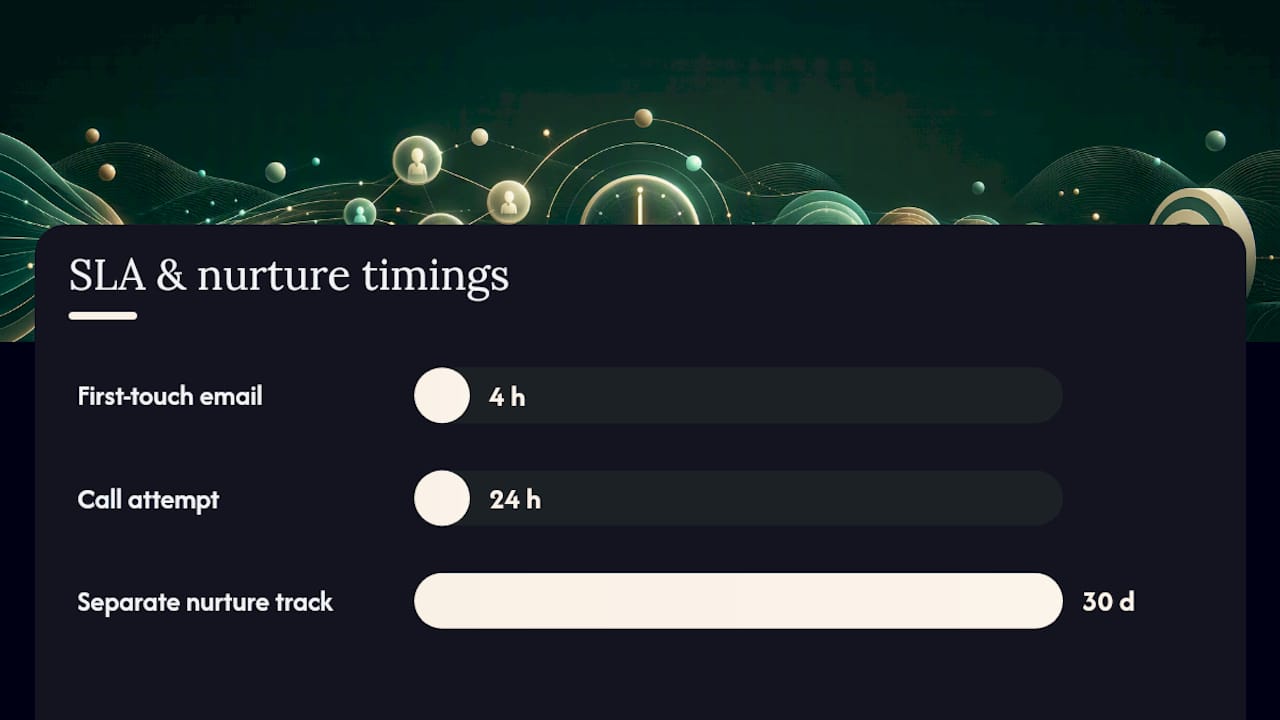
Pro Tip: Route syndicated leads into a separate nurture track from your inbound leads for the first 30 days. Mixing the two skews your email engagement benchmarks and makes it harder to tell whether the syndication source itself is underperforming or your nurture copy is.
The handoff step is where most programs quietly break. Marketing treats a validated lead as “delivered” the moment it lands in the CRM, while sales treats it as “not a real lead” because no one called within the hour. Fix this with a written service-level agreement: validated syndicated leads get a first-touch email within four hours and a call attempt within one business day, logged against a shared dashboard both teams can see.
Which Content Syndication Model Fits Your Program?
Four models dominate the market, and they carry very different cost shapes and quality profiles.
Pay-per-lead platforms charge a fixed fee per validated lead, typically landing between $30 and $150 per lead depending on targeting specificity and industry. You get volume and predictable budgeting, but the leads arrive cold and require heavier nurture.
Editorial and newsletter syndication places your content inside a publisher’s or newsletter operator’s own editorial flow, often reaching hundreds of thousands of targeted subscribers through native advertorial placements. Cost per lead runs higher, but the borrowed editorial trust tends to produce warmer engagement.
Co-created partnerships involve building a report or webinar jointly with a complementary vendor and splitting the audience. You share production cost and reach both audiences, but you also share the leads, which requires a clear split agreement up front.
Republishing and repurposing takes an existing asset and places it on a partner site or syndication network under a canonical tag pointing back to your original. This protects your SEO equity while extending reach, but only works when the canonical and cross-linking terms are written into the contract, not assumed.
Most mature programs don’t pick one model exclusively. A rotating mix, one pay-per-lead platform, one editorial placement, and one newsletter partner running on a quarterly cadence, tends to deliver steadier lead volume while still protecting the long-term SEO and brand-authority upside that pure pay-per-lead volume can’t provide on its own.
Which Assets Should You Syndicate, and How Should You Gate Them?
Original research reports, benchmarking studies, tactical playbooks, and recorded webinars consistently outperform generic guides in syndication channels, because buyers researching a purchase are actively hunting for data and frameworks they can’t get from a search engine summary. A thin “ultimate guide” gets ignored in a syndication library stacked next to fifty other thin guides.

Statistic to watch: Digital-native buyer cohorts are reshaping how B2B purchases happen, leaning harder on self-serve research before ever engaging a vendor directly. That shift raises the bar on what counts as a “gate-worthy” asset. If the content doesn’t teach something the reader couldn’t have found in five minutes of searching, it isn’t ready for syndication.
Gate strategically, not maximally:
Ask for name, business email, company, title, and one qualifying field like company size or primary challenge.
Skip phone number at the gate; ask for it later in nurture once trust is established.
Add one intent-revealing question (“What’s driving this research right now?”) to give your SDR team a real conversation starter.
Before syndicating anything, run it against a short quality check: does it contain data no competitor has published, does it hand the reader a usable framework rather than just advice, and is it credited to a named executive or subject-matter expert rather than “the marketing team”? Assets that pass all three consistently outperform the rest of your library.
How Do You Vet a Content Syndication Partner?
Vendor quality varies enormously in this space, and the difference between a strong partner and a lead-mill is rarely visible until you’re three months and several thousand dollars into a contract. Ask these questions before you sign anything.
Where do your leads actually come from? A transparent vendor names its lead sources, whether that’s an owned audience, a co-registration network, or a licensed opt-in list, and will show you a sample lead record with full attribution data.
Can I see validated sample leads before committing budget? Any vendor unwilling to share a small sample batch for your team to call and verify is signaling something about the quality behind the curtain.
What’s your exclusivity policy? Find out whether the same lead gets sold to your direct competitors in the same buying window, and get that answer in writing.
How do refunds or replacements work? A serious vendor will replace or refund leads that fail basic validation, wrong industry, disconnected number, obviously fake title, without an argument.
Red flags that should end the conversation immediately: a CPL priced dramatically below the market range, vague answers about “our proprietary network” with no specifics, and any hesitation about letting you audit a sample before the first invoice.
Pro Tip: Request a 90-day pilot with a hard cap on spend and a written replacement clause before committing to an annual contract. A partner confident in lead quality will agree to this without pushback; one who resists is telling you something.
On the contract itself, confirm three things in writing: who owns the resulting contact data, how attribution gets reported back to you (source, campaign, timestamp), and what happens contractually if a batch of leads fails your validation criteria at scale.
What KPIs and Benchmarks Should You Track?
Four metrics matter more than any dashboard vanity number: cost per lead, MQL-to-SQL conversion rate, pipeline dollars influenced, and sales-accepted lead rate. Everything else is supporting detail.
Metric | What to watch |
|---|---|
Cost per lead | Pay-per-lead platforms commonly run $30 to $150; editorial placements cost more per lead but often convert at a higher rate |
MQL to SQL rate | Track separately from inbound leads for the first quarter to isolate source performance |
Pipeline influenced | Tag every syndicated lead with a source and campaign field in the CRM so downstream revenue traces back correctly |
Sales-accepted rate | If SDRs are rejecting more than a third of delivered leads, the targeting or the vendor needs a hard look |
CPL moves with targeting specificity, industry vertical, and seniority filters. Tighter ICP filters raise the per-lead cost but usually improve downstream conversion enough to justify it. Attribution only works if UTM parameters and a dedicated source field are set up before the campaign launches, not reconstructed afterward from guesswork.
Three levers consistently move performance once a program is live:
Tighten the ideal customer profile filters even if it reduces raw lead volume.
Test two different offers (a report versus a webinar) against the same audience segment.
Shorten the first-touch follow-up window; speed to contact correlates directly with conversion.
What Are the Biggest Content Syndication Risks?
Four failure modes account for most wasted syndication budget, and each one has a straightforward fix.
Duplicate content hurting SEO. Republishing without a canonical tag or a contractual no-index agreement on the partner side can cannibalize your own search rankings. Fix it in the contract before the asset goes live.
Recycled or low-quality lead pools. Some vendors resell the same contact list across multiple clients. Mandatory sample audits and a written replacement clause catch this before it drains your budget.
Weak sales handoff. Leads that sit unworked for three days convert at a fraction of the rate of leads contacted within hours. A written SLA between marketing and sales fixes this.
Channel concentration. Relying on a single pay-per-lead vendor leaves you exposed if that vendor’s audience quality drifts. Spreading spend across a pay-per-lead platform, an editorial partner, and a newsletter reduces that exposure.
How Aligntcc Approaches Syndication-Driven Programs
Most syndication programs fail for a boring reason: the same team, or the same generative tool, produces both the original research and the six repurposed versions of it, and the repurposed pieces read like watered-down copies of the source. Aligntcc runs separate AI-enhanced workflows for research and repurposing, so the syndicated asset never feels like a diluted version of the original report. One pipeline builds the primary research and framework; a distinct pipeline adapts it for each channel’s format and audience without losing the original’s argument.
That separation matters more than it sounds. A newsletter placement and a pay-per-lead platform library need genuinely different framing, not the same PDF with a new headline.
Outcomes clients see from this approach include:
Faster asset-to-channel turnaround because repurposing doesn’t wait on the research team’s calendar.
Syndicated leads that better match the ICP filters set at the campaign brief stage.
Separating the “what we found” work from the “how we say it here” work is the difference between syndicated content that reads like a rerun and content that reads like it was written for that specific room.
Timing Matters More Than Most Marketers Admit
Syndication rarely fails because the content was weak. It fails because a team launched it during a quarter when nurture capacity was already stretched thin, and the leads arrived faster than sales could work them.
My rule of thumb: don’t turn on a syndication channel until you’ve confirmed someone can respond to a new lead within four hours, consistently, for at least two weeks straight. If that response time isn’t already happening with your inbound leads, adding a colder, higher-volume lead source will only expose the gap faster. Fix the response time first. The channel will still be there next month.
Let Aligntcc Run the Program You Just Read About
Building the vetting checklist, the nurture SLA, and the AI-separated research-versus-repurposing workflow described above takes real operational lift, and most in-house marketing teams are already stretched across a dozen other priorities. Aligntcc is the alternative to piecing together a syndication program vendor by vendor: one team plans your distribution and asset mapping before the content brief is even finished, then manages the vendor relationships, lead validation, and sales handoff SLA from a single point of accountability.

Aligntcc’s collective model pairs strategists with the AI-enhanced production pipelines described above, so your syndicated assets get built for distribution from day one instead of retrofitted after they’re already written. That integration extends into your existing CRM and nurture stack rather than replacing it, which means your sales team sees the same lead records and SLA dashboard regardless of which channel the lead came through.
If your current syndication spend is producing leads your SDRs won’t call, book a strategy call with Aligntcc to map out a program built around validated lead sources and a nurture handoff that actually holds up.
Frequently Asked Questions
What is B2B content syndication, exactly? It’s the practice of republishing or placing your gated content, research reports, playbooks, webinars, on third-party platforms, newsletters, or publisher sites to reach a wider audience and generate leads outside your owned channels.
How much does content syndication cost per lead? Pay-per-lead platforms typically charge $30 to $150 per lead, depending on targeting specificity. Editorial and newsletter placements usually cost more per lead but often convert at higher rates.
Is content syndication worth it for smaller deal sizes? It’s usually a weaker fit below roughly $1,000 in average contract value, since the cost per lead can outpace the eventual deal margin. Deals above $10,000 typically justify the investment.
How fast should sales follow up on a syndicated lead? Within hours, not days. Syndicated leads are colder than inbound requests, and response speed inside the first four hours correlates directly with conversion.
Does syndicated content hurt my SEO through duplicate content? It can, if there’s no canonical tag or no-index agreement with the partner. Address this in the contract before the content goes live, not after you notice a ranking drop.
Sources
Gartner and Forrester cover buyer behavior; Toolradar and Backlinko cover program design; INFUSE supplies definitions.
Gartner sales survey finds 67 percent of B2B buyers prefer a rep-free experience
Digital natives are rewriting B2B buying and it’s impacting your revenue performance
Content Syndication for B2B SaaS: What Works in 2026 | Toolradar Blog
Recommended
B2B Content Syndication: A 2026 Lead Generation Playbook
THE POINT
B2B Content Syndication: A 2026 Lead Generation Playbook
KEY TAKEAWAYS
01
Unlock leads in 2026 with B2B content syndication strategies that amplify your reach and engage buyers already seeking solutions.
02
Unlock leads in 2026 with B2B content syndication strategies that amplify your reach and engage buyers already seeking solutions.
03
Unlock leads in 2026 with B2B content syndication strategies that amplify your reach and engage buyers already seeking solutions.
RELATED INSIGHTS




LET’S TALK
What are you trying to grow next?
Brand, launch, market entry or performance. Book 30 minutes and tell us what you’re working on.