•
Event Guest Management: A Playbook for Brand Teams
Event guest management is the work of deciding who belongs in the room, inviting them with purpose, tracking every response and making each guest feel expected from the first email to the follow-up. Done well, it turns a guest list into a commercial asset. Done badly, it leaves you with a full room and no pipeline.
This guide is for marketing leaders running launches, private dinners, trade show programs and executive gatherings. It covers the process, the VIP layer, the data rules and the metrics that prove the event worked.
AligntccMake Every Brand Moment CountAlign TCC helps growing brands sharpen their positioning and develop targeted marketing strategies that engage audiences across markets.Explore Align TCC
TL;DR
Guest management is the full cycle of inviting, registering, engaging and following up with guests, not a spreadsheet of names.
Segment before you invite. VIPs, prospects, partners and press need different messages, owners and follow-up.
Treat every RSVP status as a trigger. A “yes” starts a workflow, a “no” stops generic reminders.
Privacy follows the guest’s residency, not the venue. Cross-border events need the strictest applicable rule.
Judge the event by what happens after it: meetings booked, deals advanced, relationships deepened.
Table of Contents
What event guest management actually covers
Start with the goal, then build the list
Segment your guests before you write a word
Run RSVPs as signals, not a headcount
VIP guest management: where mass tools fail
Event hospitality planning: the guest-first timeline
Privacy and consent when guests come from several markets
Perspective: guest lists are brand decisions
Measure what happens after the event
Common mistakes to avoid
Where Align fits
FAQ
Sources
What event guest management actually covers
One industry definition from Launchmetrics describes guest management as planning, organizing and tracking how brands invite, register and engage guests across formats, from fashion shows to product launches and private dinners. The goal is to centralize lists, RSVPs and attendance data in one place so operations run smoothly and impact can be measured.
In practice that breaks into six jobs:
Target: define who you want in the room and why.
Invite: reach each segment through the right channel and sender.
Register: capture only the data you need, with clear consent.
Confirm and prepare: handle RSVPs, plus-ones, dietary needs, travel and access.
Host: check-in, seating, introductions, and on-site recovery when something slips.
Follow up: convert attendance into conversations.
Most teams over-invest in step 5 and under-invest in steps 1 and 6. The room looks great. The result is hard to trace.
Start with the goal, then build the list
A guest list is a strategic tool, not an admin task. Accelevents frames it as invitation management: decide who you want in the room, invite them with purpose, track RSVP outcomes and use those signals to guide follow-up.
That only works if the goal is written down first. A product launch for the press needs a different list than a customer appreciation dinner or a B2B hospitality suite. Management standards such as ISO 20121 point the same way: set clear objectives early, then review and revise them as the event evolves so logistics, technology and execution stay aligned with the mission.
A simple list-building frame
Before a single invite goes out, answer these for each segment:
Who are they? Name accounts, roles and relationships, not just job titles.
What do we want from them? A meeting, a referral, a testimonial, a story in the press.
What do they want from us? Access, insight, status, a peer group.
Who owns the relationship? One named person, not “the team”.
What does success look like? One number per segment.
For B2B programs, this is where account-based thinking pays off. If you are building a target account list for a trade show or hospitality program, our guide on trade show marketing strategy for B2B shows how to work the list before the event so meetings are booked before anyone lands.
Segment your guests before you write a word
A single invitation sent to everyone is the fastest way to flatten your event. Segment first, then write.
Segment | What they need | Who invites | Follow-up |
|---|---|---|---|
VIP clients and executives | Personal access, privacy, a named host | A senior leader, personally | Same-week call from the host |
High-value prospects | A reason to attend, relevant peers | The account owner | Meeting booked within days |
Partners and sponsors | Visibility, clear role | Partnerships lead | Joint recap |
Press and creators | Story angle, assets, access | PR or creator lead | Content brief and thank-you |
General registrants | Logistics, agenda | Automated sequence | Survey and content |
Segmenting is also an audience question. If your guests come from several markets or buyer types, a practical walkthrough on audience profiling can help you decide which groups deserve their own message and how to shape it.
Run RSVPs as signals, not a headcount
A headcount tells you how many chairs to rent. A signal tells you what to do next. Accelevents describes the shift from static spreadsheets to mapping the attendee journey, where each RSVP status triggers a different action. A “yes” starts a concierge workflow. A “no” stops generic reminders.
Here is how that looks in a working system:
Invited, no response: one personal nudge from the owner after the first reminder, then stop.
Yes: confirmation within hours, a short preference form (dietary, access, travel), and a named contact.
Maybe: a direct message asking what would make it a yes. Often it is a scheduling issue you can solve.
No: a graceful reply, a content or recording offer, and a tag for the next event.
Waitlist: a clear status and a promise to confirm by a set date.
No-show: a thoughtful note within 24 hours, never a reproach.
Map the journey in full. The Event Planner Expo describes an attendee journey as the complete sequence of interactions with an event: discovery, registration, preparation, the onsite experience and what follows. Each stage deserves an owner and a message.
Keep the data in one place
The most common operational failure is a list that lives in four files: one in marketing, one in sales, one with the venue and one on an assistant’s phone. Pick a single source of truth, whether that is a CRM, a dedicated registration platform or a well-governed shared system. If you are comparing tools to coordinate tasks, vendors and guest data together, this roundup of project management tools for event planners is a useful starting point for the planning side.
VIP guest management: where mass tools fail
VIPs are not a bigger version of general attendees. They are a different product. Practitioners point to one pitfall again and again: relying on automated, mass-market communication. High-value guests expect bespoke engagement, and generic messaging dilutes the exclusivity of the experience, as Accelevents notes when it discusses segmenting VIP data and building low-volume communication paths separate from general marketing.
The fashion world, where seating and status are scrutinized in public, has learned this the hard way. Launchmetrics built a whole guide around VIP guest management mistakes to avoid. You do not need a runway to borrow the lesson.
The VIP checklist
Separate list, separate sender. VIP invitations come from a person, not a marketing platform address.
One host per guest. Assign a named person who greets, introduces and stays reachable all evening.
Brief the team. Titles, pronunciations, relationships, topics to raise and topics to avoid.
Design the arrival. Private entrance or short queue, no repeated questions, name known on approach.
Plan seating on purpose. Put people next to someone worth meeting, not simply next to their colleagues.
Prepare recovery moves. Missed flight, wrong name on a badge, dietary mistake: decide in advance who fixes it and how.
Close the loop. A personal message within 24 hours, and a concrete next step within a week.
If you are hosting international leaders, build in cultural fluency: titles, gift etiquette, seating hierarchy and communication platforms differ by market. In China, for example, guests often coordinate on WeChat rather than email, so your confirmation path should meet them there.
Event hospitality planning: the guest-first timeline
Hospitality is everything that happens between a guest saying yes and the first handshake: travel, accommodation, transfers, meals, access and ground rules. A realistic timeline keeps it from collapsing into the final week.
Association event specialists at i4a recommend a 12-month runway, starting with goals and venue selection 9 to 12 months out, then sponsors, programming and technology. Not every brand event needs a year. A private dinner may need eight weeks. But the order holds.
Goals and segments: fix the purpose, audience and success metrics.
Venue and date: check capacity against your realistic confirmed count, not the invited count.
Invitation design: save-the-date for VIPs first, full invitations for others.
Registration and consent: build the form, keep it short, and state how you will use the data.
Hospitality logistics: rooms, transfers, accessibility and dietary needs.
Run of show and staffing: hosts, greeters, check-in, escalation contacts.
Event day: check-in, live list updates, on-site recovery.
Follow-up: thank-yous, content, meeting requests, internal debrief.
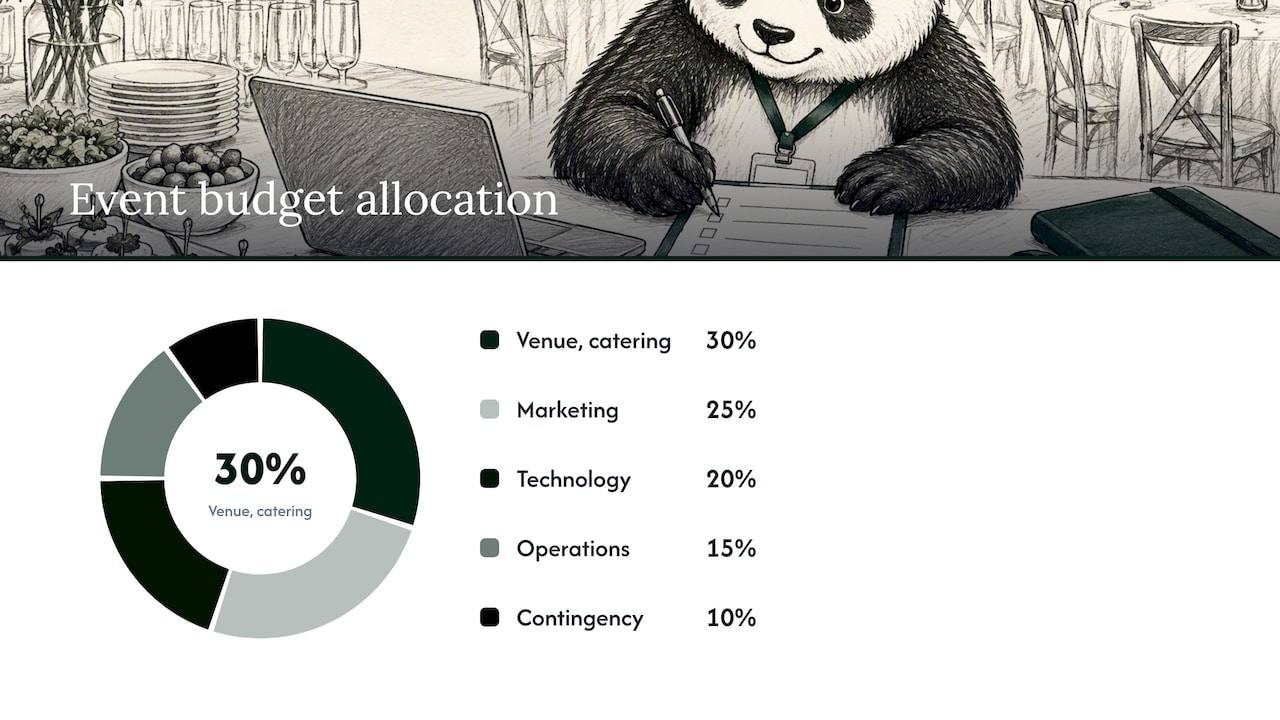
On budgets, one Monday.com analysis cites a typical split of 30% venue and catering, 25% marketing, 20% technology and production, 15% operations and 10% contingency. Treat it as a starting benchmark, not a rule. If your event leans on VIP hospitality, you will probably shift money from marketing toward operations and personal touches.
Privacy and consent when guests come from several markets
Guest data is personal data. If your guests cross borders, the rules follow the guest, not the venue. According to Ticket Fairy, the EU’s GDPR applies to any organization processing personal data of EU residents wherever the event takes place, with fines reaching up to €20 million or 4% of annual worldwide revenue. The same source notes that China’s Personal Information Protection Law (PIPL) sets similarly stringent standards for data collected in China.
What this means in practice:
Collect less. Ask only for what you need to host the guest. Large events publish this openly; the HUAWEI CONNECT 2026 privacy policy, for instance, lists the exact fields collected at invitation: name, company, job title, contact details and similar items.
Get clear opt-in for marketing. Separate event logistics from future promotional emails.
Give guests control. Make it simple to edit or delete their information.
Plan cross-border transfers. Moving personal data out of China needs careful handling under PIPL, which can include explicit consent. Have your legal counsel review the setup before the first invitation goes out.
Apply the strictest rule by default when a guest list mixes residencies.
This is a legal topic, and rules change. Check current requirements with a privacy lawyer in each market you invite from, particularly for events that involve China, the EU and the US at once.
Perspective: guest lists are brand decisions
We see event guest management as a brand decision first and a logistics task second. Who you invite says who you are. Who you seat together says what you believe about your market.
At Align, we blend Scandinavian brand thinking with the speed of Chinese market execution, and that shows up in how we think about events. Scandinavian discipline asks: what is the one idea this room should leave with? Chinese market speed asks: how fast can we turn attendance into a commercial conversation? The best events answer both.
Three convictions guide our approach:
The list is the strategy. A flawless dinner with the wrong people is a cost. A modest gathering with the right twelve accounts is a pipeline.
AI should handle the noise, not the relationships. Use it to clean data, draft first-pass segmentation and flag follow-ups. Keep the VIP touch human. Technology enhances the work. It does not replace the host.
Cultural fluency is a competitive edge. Guests from Shanghai, Stockholm and San Francisco read the same event differently. Platform, protocol and timing all change. Immersion in the market teaches this faster than any briefing document.
If you are a Western brand entering China, or a Chinese company building presence in Europe and North America, the guest list is often the first place where cultural assumptions break. Fix it early.
— Kalle
Measure what happens after the event
Attendance is a vanity number unless it connects to a business outcome. Decide metrics per segment before the event:
Segment | Useful metrics |
|---|---|
VIPs | Follow-up calls held, introductions made, deals advanced |
Prospects | Meetings booked, opportunities created, accounts moved a stage |
Partners | Joint leads, co-created content, renewals |
Press and creators | Coverage, content published, reach |
All guests | RSVP-to-attendance rate, satisfaction, opt-in rate for future contact |
Track the RSVP-to-attendance rate separately for each segment. A VIP segment with a low show rate means the invitation or the date failed. A general segment with a low show rate is normal and should be priced into capacity planning.
Then close the loop inside 48 hours. The strongest follow-up is specific: a note that references the conversation, a content piece they asked about, a calendar link for a proposed next step.
Common mistakes to avoid
Inviting before segmenting. You cannot repair a flat message after it is sent.
Treating no-shows as a surprise. Plan capacity using realistic confirmation rates for each segment, and keep a waitlist ready.
Over-collecting data. Every extra field adds friction and legal exposure.
No single owner. When five people “own” the guest list, nobody does.
Forgetting the human recovery plan. Something will go wrong. Decide who solves it and what they may spend.
Ignoring the follow-up. The event ends at the follow-up, not at the door.
Where Align fits
If your team runs launches, hospitality programs or leadership events across several markets and needs senior capacity without building every function in-house, we can help. Our work spans go-to-market and market entry, brand and positioning, creator and influencer programs, and demand and performance, so the guest list connects to the whole commercial plan. See the full range on our services page, or explore our Leadership Trips to China for first-hand market immersion. Ready to talk? Book a Strategy Call and tell us what the room needs to achieve.
FAQ
What is guest management in events?
It is the process of planning, organizing and tracking how you invite, register, engage and follow up with guests. It centralizes lists, RSVPs and attendance data so you can run the event smoothly and measure its impact.
How is VIP guest management different from general attendee management?
VIPs need personal, low-volume communication from a named host rather than automated mass messaging. They also need private arrival paths, briefed staff and a fast, personal follow-up. Treat their data and communication as a separate track.
Do I need special software for guest management?
Not always. Small, high-touch events can run on a well-governed CRM or shared list. Larger programs benefit from a platform that handles invitations, registration, check-in and reporting in one place. Choose based on guest volume, the number of segments and your privacy obligations.
Does GDPR apply if my event is in the US?
It can. GDPR applies to the personal data of EU residents wherever the event happens, according to Ticket Fairy. If you invite guests from Europe, or from China under PIPL, confirm your obligations with a privacy lawyer before collecting data.
Sources
Launchmetrics: What Not to Do With a VIP, Guest Management Mistakes to Avoid
Accelevents: Guest List Management for Sponsors and Exhibitors
Ticket Fairy: Protect Attendee Data Privacy, 2026 Best Practices
Recommended
RELATED INSIGHTS


LET’S TALK
What are you trying to grow next?
Brand, launch, market entry or performance. Book 30 minutes and tell us what you’re working on.