•
Social Media Crisis Management: First 90 Minutes and AI Monitoring
Social media crisis management is the discipline of detecting, responding to, and recovering from reputation-threatening events on social platforms before they spiral into lasting damage. The moment something breaks, your first move is to acknowledge it publicly and pause every scheduled or automated post. From there, the widely adopted 15-20-60-90 timeline gives you a tested sequence for the first 90 minutes.
TL;DR:
Respond within the first hour: brands doing so are 85% more likely to maintain trust; set checkpoints at 15, 20, 60, and 90 minutes.
Before an incident, assign severity tiers and approval roles, keep at least two active admins per platform, and test the escalation plan quarterly.
During response, pause scheduled posts, ads, chatbots, and partner content; use one public spokesperson, and involve legal or operations as soon as exposure seems plausible.
Tell employees and partners before publishing publicly, then give affected customers direct support; public statements should separate confirmed facts from speculation.
Within 30 days, revise templates, contact lists, and automation procedures, then measure recovery through sentiment, coverage tone, and business measures such as retention or inquiries.
AligntccBuild Stronger Brand ReadinessAlign TCC helps brands sharpen positioning and create targeted marketing strategies across platforms, with AI supporting the creative process.Explore Align TCC
Table of Contents
What Counts as a Social Media Crisis
Why Social Media Crisis Management Matters More in 2026
How to Prepare Before a Crisis: A Practical Checklist
How to Manage an Active Crisis: The Operational Playbook
The First-Hour and 15-20-60-90 Timeline
Rebuilding Trust and Running the Post-Crisis Review
Practitioner Playbook: Where Operational Hygiene Meets AI-Aware Monitoring
Communicating With Stakeholders Beyond Your Public Feed
Managing Influencer and Creator Partnerships During a Crisis
Legal and Compliance Considerations You Can’t Skip
Author Perspective: Realistic Pitfalls and Quick Wins
How We Help You Build Crisis Readiness That Holds
FAQ
Sources
What Counts as a Social Media Crisis
Not every angry comment deserves a war room. A crisis is a situation that threatens your brand’s reputation, safety, or legal standing at a pace that outruns your normal response process. A single customer complaint is routine. A screenshot of a staff member’s offensive post going viral, a safety recall, a data breach, or a wave of misinformation about your product are different animals entirely.
Qualifying incidents typically include:
A post or comment that goes viral for the wrong reasons and gains traction across multiple platforms
Misinformation or a manipulated image or video spreading faster than you can correct it
A safety, legal, or regulatory issue surfacing publicly before your team is informed internally
An employee, partner, or influencer statement that contradicts your brand’s values or legal position
Severity tends to move through tiers: isolated complaints, a wave of similar comments, full viral spread across platforms, and finally safety or legal escalation that pulls in regulators, media, or law enforcement. Knowing which tier you’re in determines whether marketing handles it alone or legal and operations join within minutes.
Why Social Media Crisis Management Matters More in 2026
Speed used to be a competitive advantage. Now it’s survival. AI-generated misinformation and deepfakes can fabricate a convincing crisis from nothing, spreading before your team even confirms whether the underlying claim is true. Waiting for certainty before responding is no longer realistic.
Source matters as much as speed. Verified and institutional accounts tend to produce a calmer public sentiment during emergencies than unverified chatter, because people gravitate toward official channels and recognized experts when they want credible updates. That is a strong argument for strengthening your verified presence and expert voices well before a crisis hits, not during one.
There’s also a secondary wave to plan for. Once a crisis breaks, a second layer of commentary emerges: people reacting not to the original event, but to how your brand responds to it. This secondary crisis communication is often driven by moral signaling and social conformity, and a response that looks low-accountability tends to increase negative word-of-mouth rather than calm it.
The pattern that holds up across incidents: empathy, speed, and transparency together slow the spread. Any one alone falls short. A fast but cold statement reads as damage control. An empathetic but slow one reads as indecision. You need both, delivered on a clock.
How to Prepare Before a Crisis: A Practical Checklist
Readiness is built in the calm weeks, not the chaotic hours. Treat the following as non-negotiable groundwork.
Set up social listening. Define keywords, brand sentinels, and alert thresholds so your team gets flagged before a story breaks wide, not after, using social media marketing examples that drive real results.
Secure accounts and admin access. Maintain at least two active admins per platform, log credentials securely, and document a recovery flow if an account is compromised.
Designate crisis roles and escalation tiers. Name who owns communications, who approves statements, and who gets pulled in at each severity tier, with a contact tree everyone can find in seconds.
Draft holding statements and tone rules. Prepare templates for the most likely scenarios and store them somewhere every responder can reach without hunting for a password.
Inventory your automation. Map every scheduled post, chatbot, and ad campaign, and build a kill-switch procedure that one person can execute in under five minutes.
Run tabletop exercises. Simulate a scenario quarterly, assign an owner to each action item, and fix what breaks before a real event tests it for you.
Pro Tip: Keep your holding statement templates in a shared doc with edit history off, so no one accidentally publishes a half-finished draft during a live incident.
How to Manage an Active Crisis: The Operational Playbook
Once a crisis is confirmed, structure beats improvisation. Run these steps in order.
Triage and assign a tier. Decide within minutes whether this is a localized complaint, a wave, a viral event, or a safety or legal matter, since the tier determines who gets pulled in.
Activate the crisis team. Notify the roles you defined during preparation and confirm who is drafting, who is approving, and who is monitoring.
Choose a single public voice. One account, one spokesperson, one consistent tone. Mixed messages from multiple employees or executives multiply confusion.
Post a holding statement. Acknowledge the issue, commit to a specific time for your next update, and name the channel where that update will appear.
Pause everything scheduled. Scheduled posts, running ad campaigns, and auto-reply bots all get shut off immediately, since a cheerful promotional post landing mid-crisis compounds the damage.
Route direct messages to a central inbox. This keeps your record intact and prevents duplicate or contradictory replies from different staff members.
Monitor sentiment and trending nodes. Track where the conversation is moving, which accounts are driving volume, and whether the tone is shifting toward resolution or escalation.
Log evidence as you go. Timestamped screenshots, links, and direct message transcripts belong in a centralized incident log that every responder can access, which keeps the team aligned and strengthens any later corrective claims.
While these steps run, a few practical rules keep the response coherent:
Pair formal, institutional statements with empathetic, human replies where the situation calls for it, since research on enterprise crisis response shows a combined formal and informal strategy reduces spread more than a single rigid tone.
Loop in legal, operations, and customer support the moment safety or legal exposure becomes plausible, not after it’s confirmed.
Enforce a comment policy for staff so well-meaning employees don’t freelance a response that contradicts the official line.
A hybrid tone isn’t softness. It’s the difference between a brand that sounds like a legal department and one that sounds like it’s run by people who understand what just happened.
The First-Hour and 15-20-60-90 Timeline
Brands that post an initial response within the first hour are 85% more likely to maintain public trust than those that stay silent, which is the entire argument for running a fixed clock instead of waiting for a perfect statement.
At 15 minutes: Acknowledge publicly and pin the post. Assign one named responder to own the thread.
At 20 minutes: Share only confirmed facts and state exactly when the next update will land.
At 60 minutes: Publish a more detailed status update, including any remediation steps already underway.
At 90 minutes: Deliver a full briefing and set an ongoing update cadence until the situation stabilizes.
Alongside the clock, your first-hour operational checklist runs in parallel: pause all scheduled content, gather proof before you write a word, pin your acknowledgment where it won’t get buried, and protect admin credentials in case the crisis involves account compromise. Track sentiment shift at each checkpoint so you know whether your messaging is working or needs to change.
Rebuilding Trust and Running the Post-Crisis Review
Recovery doesn’t end when the news cycle moves on. It ends when you’ve shown, visibly and repeatedly, that something actually changed.
Say what you changed, then prove it over the following weeks. A single apology post rarely closes the loop. Visible follow-through over time is what rebuilds confidence, whether that’s a policy update, a product fix, or a new verification step you can point to.
Within 30 days, your review should produce:
Updated holding statement templates that reflect what actually worked and what fell flat
A refreshed crisis contact list with any gaps in the escalation tree closed
A revised automation inventory so the next kill switch takes seconds, not minutes
Measure recovery with more than vibes: track sentiment trend, media and social coverage tone, and the business KPIs that matter to your leadership, whether that’s retention, conversion, or inbound inquiries. Brands that recover well tend to share one pattern across industries, retail, travel, and technology alike: they treat the post-mortem as seriously as the response itself, and they fold the lessons into the next version of the plan rather than filing it away.
Practitioner Playbook: Where Operational Hygiene Meets AI-Aware Monitoring
The strongest crisis plans we’ve seen treat social media as one channel inside the broader enterprise crisis plan, never a siloed document that marketing owns alone. Practitioner guidance is consistent on this: social protocols need the same approval gates, authority structure, and operational kill-switches as every other crisis channel.
Operational hygiene is where most plans quietly fail. Pausing posts, ads, and chatbots takes seconds once someone owns the switch, and multiple active admins prevent a single point of failure from locking your team out mid-crisis.
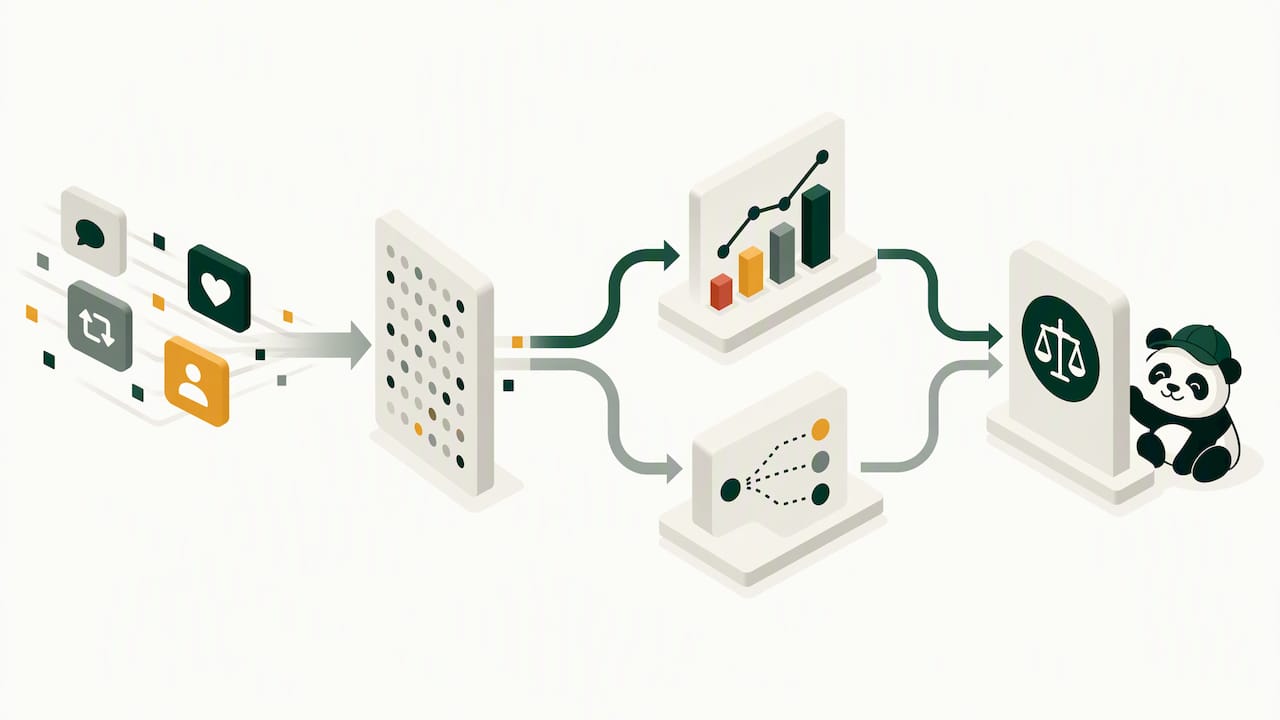
AI tools now speed up monitoring and scenario modeling considerably: faster keyword detection, quicker sentiment shifts, and scenario runs that used to take a team days. We treat AI as a way to sharpen human judgment during a live incident, not a replacement for the person making the final call.
Pro Tip: Assign your automation kill-switch to two people, not one, so a single vacation or sick day never becomes the reason a promotional post goes out mid-crisis.
Communicating With Stakeholders Beyond Your Public Feed
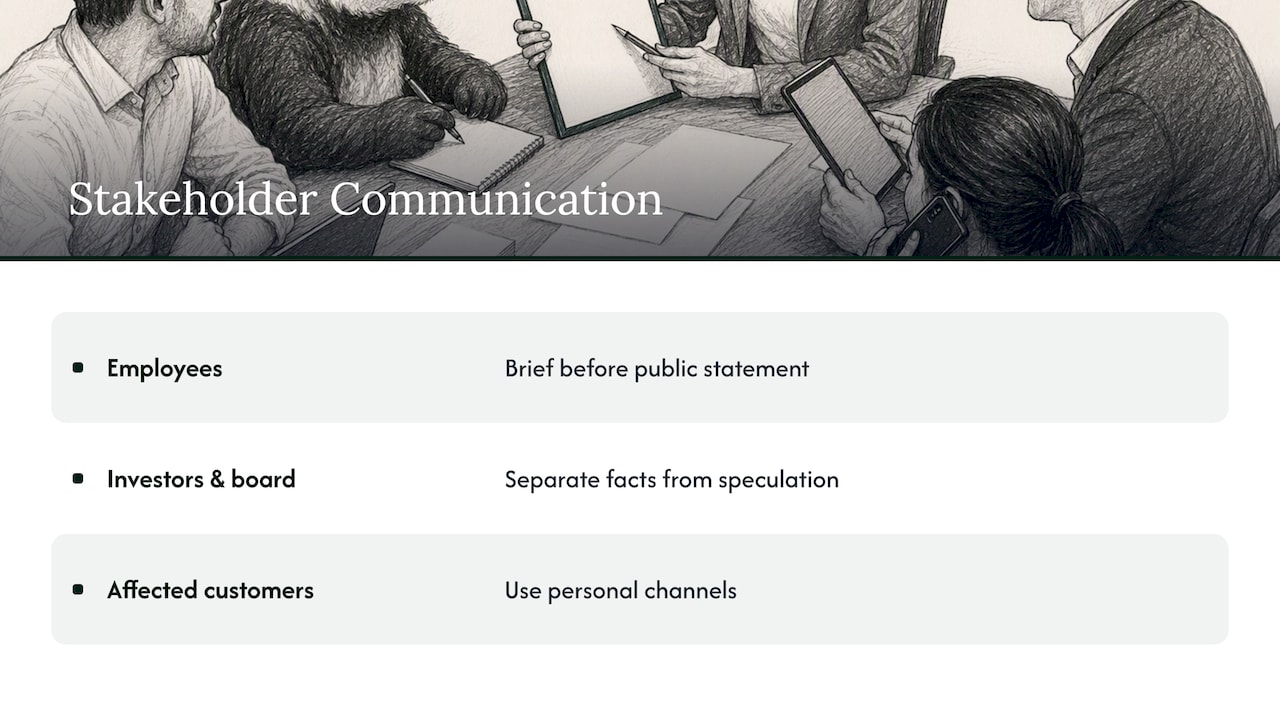
Your public statement is only one audience. Employees, investors, partners, and customers each need a version of the truth tailored to what they’re responsible for, delivered through the right channel rather than left to find out from the same tweet everyone else saw.
Employees need internal guidance before the public statement goes live, including what they can and can’t say if a customer or journalist asks them directly. Investors and board members need a factual briefing that separates confirmed information from speculation, especially if the crisis has any financial or regulatory dimension. Customers directly affected deserve a more personal channel than a general social post, whether that’s email, a dedicated support line, or a direct message thread.
The common failure point is sequencing: a public statement that reaches employees or investors after they’ve already seen it shared by someone else erodes trust fast, even if the content is accurate. Build your stakeholder communication order into the same plan that governs your public response, so everyone who needs to know hears it on a schedule you control.
Managing Influencer and Creator Partnerships During a Crisis
When a crisis touches a partner you don’t fully control, speed gets harder and the stakes get higher. The first step is contact, not correction: reach your influencer or creator partners directly, before you issue any public statement that might blindside them or contradict something they’ve already posted.
Agree on a shared position quickly. If the crisis originated with the partner’s own content, give them the chance to address it themselves, ideally with guidance rather than a script that sounds scripted. If your brand is the source of the crisis and partners are getting swept into the backlash, give them clear talking points so they aren’t improvising answers to questions your team hasn’t even addressed yet.
Pause co-branded content and scheduled partner posts the same way you’d pause your own automation. A sponsored post going live mid-crisis, even one scheduled weeks earlier, reads as tone-deaf regardless of intent.
Build partnership contracts with a crisis clause in advance: expectations for pausing content, response timing, and who speaks for whom. The partnerships that survive a crisis cleanly are almost always the ones where that groundwork existed before anyone needed it.
Legal and Compliance Considerations You Can’t Skip
Legal exposure rarely announces itself clearly in the first few minutes of a crisis, which is exactly why your escalation tiers need to route safety or legal questions to counsel early rather than waiting for certainty.
Statements made publicly during a crisis can carry legal weight later, particularly admissions of fault, promises of compensation, or characterizations of an incident that turn out to be incomplete. Draft holding statements with legal review built into the template process beforehand, so you’re not writing from scratch under pressure.
Regulatory considerations vary significantly by industry and jurisdiction: data breaches, product safety issues, and employment-related incidents often carry mandatory disclosure timelines that exist independently of your social media response clock. Confirm what applies to your business and region before a crisis, not during one, since the 15-20-60-90 timeline governs your public communication, not your legal obligations.
Document everything. The same incident log that supports your post-mortem also supports legal defense if the situation escalates that far, which is one more reason centralized, timestamped evidence collection belongs in your preparation checklist rather than your improvisation.
Author Perspective: Realistic Pitfalls and Quick Wins
The failures I see repeat: a single admin with no backup, zero pre-written templates, and an escalation chain nobody has tested outside a slide deck. None of that requires a big budget to fix.
Small teams win fast with three moves: one solid holding statement template, a written automation pause checklist, and a second admin on every account. If your organization has outgrown what a lean team can manage alone, bringing in outside expertise for enterprise-grade readiness is worth serious consideration.
— Kalle
How We Help You Build Crisis Readiness That Holds
Readiness beats improvisation every time, and that’s exactly what we build with clients before the first headline ever breaks. Our crisis communications work integrates with broader commercial strategy, ensuring your response plan aligns with your brand positioning rather than existing as a standalone document.

Our relevant work includes:
Crisis communications planning integrated with your existing brand and corporate narrative
AI-aware monitoring built into a 90-day reputation plan designed for growth-stage teams
Ongoing reputation management strategy that keeps your crisis kit current long after the news cycle moves on
For teams who want a closer read on shifting platform behavior and consumer sentiment before they build a plan, our leadership trips offer direct market immersion that sharpens exactly the kind of judgment a crisis demands. Visit our services page to talk through what enterprise-ready readiness looks like for your team.
FAQ
What is social media crisis management?
Social media crisis management is the process of detecting, responding to, and recovering from reputation-threatening events on social platforms, usually anchored by a fast acknowledgment and a structured timeline like the 15-20-60-90 framework. It combines monitoring, a defined response team, and post-crisis review rather than relying on a single statement.
What is social crisis management?
Social crisis management refers to the broader organizational response to a crisis that plays out across social platforms, including internal coordination between communications, legal, and operations teams. It extends beyond posting a statement to include stakeholder communication, partner coordination, and recovery measurement.
What are the 5 C’s of crisis communication?
Definitions of the “5 C’s” vary across practitioners, but a common version includes candor, consistency, clarity, compassion, and control over the message timeline. The core principle across versions is the same: deliver accurate information quickly, in one consistent voice, with visible empathy.
How do I create a social media crisis management plan?
Start with social listening to catch early warning signs, then define crisis tiers, assign response roles, and draft holding statement templates before anything happens. Add an automation inventory with a kill-switch procedure, and test the whole plan with a tabletop exercise so gaps surface before a real incident does.
How fast should a brand respond to a social media crisis?
Brands that post an initial response within the first hour are 85% more likely to maintain public trust than those that delay. The widely used 15-20-60-90 timeline breaks that hour into acknowledgment at 15 minutes, confirmed facts at 20, a detailed update at 60, and a full briefing by 90.
Sources
Recommended
RELATED INSIGHTS


LET’S TALK
What are you trying to grow next?
Brand, launch, market entry or performance. Book 30 minutes and tell us what you’re working on.