Growth / Performance
Kalle Mobeck
•
Weibo to WeChat: Aligntcc’s Playbook to Tap WeChat’s 1.4 Billion Users
WeChat wins on private retention and commerce; Weibo wins on public reach and discovery. If you’re building brand awareness in China from zero, start on Weibo. If you already have attention and need to convert it into paying, repeat customers, WeChat is where that happens. Combined, WeChat and Weixin now exceed 1.4 billion monthly active users worldwide, which tells you where the money and the loyalty live.
TL;DR:
Weibo’s strength lies in volume and fast-paced discovery, making it ideal for brand awareness and initial exposure from strangers.
WeChat excels in relationship building and transaction management, with a focus on nurturing existing contacts and converting followers into customers.
Successful China campaigns require sequencing: ignite awareness on Weibo, then use WeChat to nurture and convert leads through Mini Programs and CRM messaging.
Features like WeChat Pay and Mini Programs enable seamless, in-platform commerce, while Weibo’s trending topics and short videos drive rapid engagement.
Verifying regional account features and deploying tailored content cadences are critical before launching multi-platform campaigns for scalable results.
AligntccBuild Your China Marketing SystemAlign TCC helps growing brands combine brand strategy with hands-on China execution across awareness, creators, paid media, and retention.Explore Align TCC
Table of Contents
WeChat vs Weibo: A Side-By-Side Snapshot
How Core Features Shape What Each Platform Is For
Who’s Actually on Each Platform, and How Often
Building a Campaign: The Weibo-to-WeChat Playbook
WeChat vs Weixin: What International Teams Get Wrong
Your First-Campaign Checklist
Aligntcc’s Take: Why the Sequence Matters More Than the Platform
Executing this pipeline well means managing account verification, bilingual community response, KOL selection, and Mini Program commerce as one connected system, not four separate vendors. Combining brand strategy with hands-on China execution can build that system for growing brands entering the market, from the initial Weibo trend push through the WeChat retention flow that turns attention into repeat revenue.
Sources
FAQ
WeChat vs Weibo: A Side-By-Side Snapshot
The two platforms solve different problems, and confusing them is the fastest way to waste a marketing budget. Weibo behaves like an open broadcast square, emphasizing public reach and discovery. WeChat behaves like a walled garden built for relationships and transactions, focusing on conversion and retention.
Dimension | ||
|---|---|---|
Network type | Open, public feed | Closed, relationship based |
Main job | Awareness and discovery | Conversion and retention |
Content reach | Anyone can see a post via hashtags and search | Mostly opt-in followers and contacts |
Commerce | Shopping links and store integrations | Native WeChat Pay and Mini Programs |
Posting tempo | Frequent, fast-moving, trend-driven | Slower, scheduled, CRM-style |
Influencer role | Macro-KOLs and celebrities for reach | Niche KOLs and private group leaders for trust |
Here’s the practical checklist version of that table: use Weibo to get noticed, use WeChat to sell and keep customers. Academic research backs this split directly. A peer-reviewed comparison of the two platforms found WeChat use correlates with relationship-building and social bonding, while Weibo use correlates with public information sharing and faster-moving conversation. That’s not branding language. That’s measured user behavior.
Weibo functions like an open square where strangers find you through hashtags and search.
WeChat functions like a private client list where you nurture people already inside your funnel.
Neither platform replaces the other. Foreign brands that treat them as competing channels usually lose to the ones that treat them as a relay.
How Core Features Shape What Each Platform Is For
WeChat’s feature set reads like a business operating system, not a social app. It bundles messaging, a social feed called Moments, branded storefronts called Official Accounts, embedded apps called Mini Programs, and a native wallet called WeChat Pay. That combination is why analysts call it a super-app rather than a social network. Nobody describes Weibo that way, and the distinction matters for how you plan a campaign.
Here’s what each feature actually does for a brand:
Official Accounts function as your owned media channel inside WeChat. Followers who subscribe get pushed content directly, which makes this the tool for nurture sequences and product education.
Mini Programs are lightweight apps that live inside WeChat itself, no download required. Brands use them for storefronts, loyalty cards, booking systems, and in-app checkout without ever sending the customer to an external website.
WeChat Pay turns a chat thread into a checkout counter. A customer can browse, ask a question, and pay without leaving the conversation.
Moments is WeChat’s closest thing to a public feed, but it only shows content to a user’s approved contacts, capping organic reach by design.
Channels, WeChat’s short-video and live-streaming feature, adds a discovery layer on top of the closed network, though its reach still skews toward existing connections more than Weibo’s open feed.
Weibo’s features point the opposite direction, toward volume and velocity. Hashtags and trending topic lists put a post in front of strangers within minutes. Super Topics work like fan-run community boards inside the platform, letting a brand or celebrity anchor an ongoing conversation that outlives any single post. Long-form posts, live streaming, and short video give creators more format flexibility than a typical WeChat Moments update, and Weibo has layered in shopping links and e-commerce integrations so a viral moment can convert on the spot instead of losing the customer to a second platform.
The tempo difference is the part most new entrants underestimate. A Weibo account that posts once a week disappears from trending feeds; the platform rewards volume and reaction speed to real-time events. A WeChat Official Account that pushes daily annoys subscribers who signed up for a relationship, not a firehose. Match your cadence to the platform’s actual mechanics, not to whichever schedule feels more comfortable for your content team.
Who’s Actually on Each Platform, and How Often
Scale alone doesn’t tell the full story, but it sets the floor for any China strategy. WeChat and Weixin’s combined monthly active user base topped 1.4 billion as of early 2026, making it one of the largest closed networks on earth. Weibo’s estimated user base runs smaller, with industry figures citing roughly 600 million monthly actives, though public estimates vary by source and measurement method.
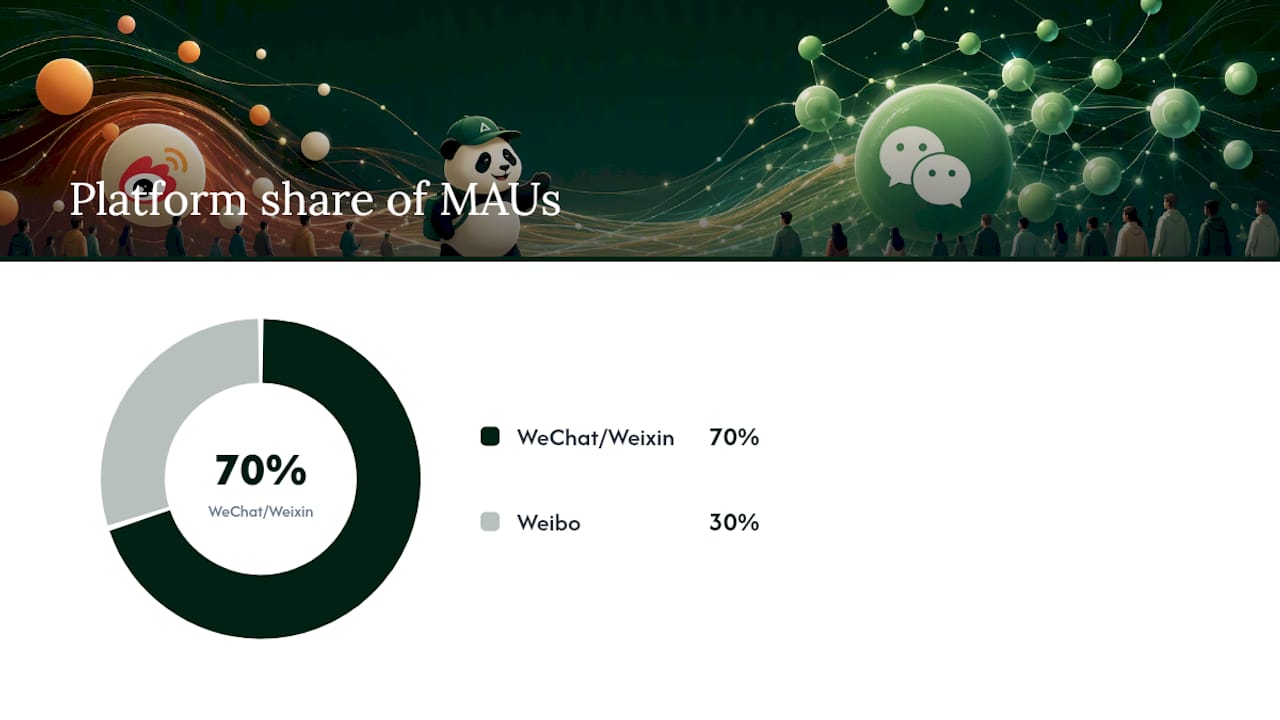
The behavioral gap matters more than the raw numbers. WeChat is a daily utility: people open it to message a coworker, pay for lunch, book a doctor’s appointment, and read a subscribed newsletter, often dozens of times a day without thinking about it as “social media” at all. Weibo behaves more like appointment viewing tied to specific triggers. Users show up when a celebrity scandal breaks, a hashtag starts trending, or a live event is happening, then their attention drops off once the moment passes.
That distinction drives cadence strategy directly:
On WeChat, consistency beats frequency. A well-timed weekly or biweekly Official Account push tends to outperform daily noise that trains subscribers to ignore you.
On Weibo, frequency beats patience. Multiple posts per day during an active campaign window is normal, because the algorithm favors freshness and real-time relevance.
Session intent differs too: WeChat sessions are transactional and habitual, Weibo sessions are exploratory and trend-driven.
If your team only has bandwidth to manage one platform well, match it to the behavior you actually need. Daily utility favors WeChat. Trend-riding favors Weibo.
Building a Campaign: The Weibo-to-WeChat Playbook
Foreign brands entering China rarely need “a presence” on both platforms. They need a funnel that moves a stranger from curiosity to customer, and the two platforms handle different stages of that funnel extremely well when sequenced correctly.
Ignite awareness on Weibo. Launch with a branded hashtag, partner with a macro-KOL or celebrity for initial reach, and time posts around a cultural moment or product reveal. Paid amplification through Weibo’s promotional tools extends the burst beyond your organic follower base.
Capture intent with a bridge mechanism. Every Weibo post that gains traction should carry a QR code or link steering interested viewers toward a WeChat Official Account or Mini Program. This is the step brands skip most often, and it’s the one that actually determines whether the Weibo spend pays for itself.
Nurture on WeChat. Once someone follows your Official Account, push structured content: product education, behind-the-scenes storytelling, limited offers. This is relationship-building, not broadcasting.
Convert inside Mini Programs. Route the nurtured follower into a Mini Program storefront where WeChat Pay closes the transaction without a single app switch.
Retain through CRM messaging. Segment your Official Account followers and message repeat customers differently than first-time buyers. This is the retention layer Weibo simply can’t replicate, because Weibo doesn’t hold a private, addressable list the way WeChat does.
KOL selection should shift at each stage too. Weibo campaigns lean on macro-influencers and celebrities whose fame drives sheer visibility. WeChat campaigns work better with niche, category-specific KOLs who run smaller but higher-trust private groups, because a WeChat audience already opted in and expects a more personal voice. Industry playbooks consistently recommend exactly this division of labor: broad reach up top, tight trust down the funnel. If you’re still deciding which influencer tier fits your budget, a comparison of micro versus macro influencer ROI is worth reading before you commit spend to either platform.
Measure each stage with a KPI that matches its job: impressions and hashtag reach on Weibo, follower growth and click-through on the bridge step, transaction volume and repeat-purchase rate inside WeChat.
Pro Tip: Don’t launch both platforms on the same day. Build Weibo momentum first, then open your WeChat Official Account once you have enough traffic to justify the nurture investment. An empty Official Account with zero content history looks abandoned, not exclusive.
WeChat vs Weixin: What International Teams Get Wrong
WeChat and Weixin are the same underlying app built by Tencent, but they’re registered and operated as distinct services with some feature differences by region. Weixin is the mainland Chinese version; WeChat is the international-facing version. They interoperate for messaging and most social functions, but assuming full feature parity is where cross-border campaigns quietly break.
Features that commonly differ or run region-restricted:
Payment functionality. WeChat Pay features available to Weixin accounts registered on the mainland don’t always extend cleanly to international WeChat accounts, particularly around merchant settlement and currency handling.
Channels and Games. Short-video and gaming features have rolled out unevenly, with some capabilities operated only through Weixin.
Certain Mini Program capabilities. Some Mini Program functions depend on mainland business licensing and verification that an international account can’t satisfy.
Before you plan a campaign around any of these features, test the actual account you’ll be running the campaign on rather than assuming a feature you read about applies to your setup. The safest sequence: verify your account type, confirm payment acceptance in a live test transaction, and check Mini Program permissions before writing the media plan around them. This single step saves more launch delays than any other item on a China checklist, and it’s exactly where Aligntcc’s China market entry work tends to catch problems early.
Your First-Campaign Checklist
Getting a first WeChat or Weibo campaign live doesn’t require a huge team, but it does require sequencing. Skip a step and you’ll be fixing verification issues mid-campaign instead of running the campaign.
Define the single goal. Awareness gap or retention gap? That answer decides your starting platform.
Verify your account before you launch content. WeChat Official Accounts and Weibo brand accounts both require verification, and mainland verification can take longer than teams expect.
Set your Mini Program or storefront basics if commerce is part of the plan, well before your Weibo campaign drives traffic toward it.
Build a content cadence calendar matched to each platform’s tempo: daily or near-daily on Weibo, consistent but spaced on WeChat.
Line up KOL partners appropriate to each stage, macro for Weibo reach, niche for WeChat trust.
Assign bilingual community management so replies happen in hours, not days. Response speed affects performance on both platforms.
Pro Tip: Budget for bilingual, always-on community management before you budget for paid media. A fast, fluent reply to a Weibo comment or a WeChat inquiry often does more for conversion than another round of ad spend.
Aligntcc’s Take: Why the Sequence Matters More Than the Platform
Most foreign brands ask “WeChat or Weibo” as if it’s a single choice. It isn’t. The real mistake is picking one platform and treating the other as optional, then wondering why awareness never turns into revenue, or why a well-funded Weibo campaign generates buzz that evaporates within a week. Buzz without a WeChat bridge is just noise with a shelf life.
Work on China market entry consistently shows the same pattern: brands that build the Weibo-to-WeChat pipeline before they spend heavily on either platform convert faster than brands that improvise the sequence after launch. Verification timing, bilingual response speed, and Mini Program readiness aren’t back-office details. These elements often determine whether a campaign scales or stalls at launch. The platforms aren’t competitors. Treated correctly, they’re two stages of the same funnel.
— Kalle
Executing this pipeline well means managing account verification, bilingual community response, KOL selection, and Mini Program commerce as one connected system, not four separate vendors. Combining brand strategy with hands-on China execution can build that system for growing brands entering the market, from the initial Weibo trend push through the WeChat retention flow that turns attention into repeat revenue.

If your team is weighing where to put budget first, the honest answer depends on whether you’re missing awareness or missing retention, and that assessment is exactly where a strategic entry framework earns its keep before a single dollar goes to media spend. Verification checks, bilingual operations, and Mini Program fit assessment are important aspects many brands discover only after a campaign is already live.
Next steps worth taking:
Review Aligntcc’s full services for China market entry and campaign execution.
Look at brands Aligntcc has already worked with to see how the pipeline plays out in practice.
Book a strategy call to map your Weibo-to-WeChat sequence before you commit media spend.
Sources
FAQ
What’s the difference between WeChat and Weixin?
They’re the same app built by Tencent, but Weixin is the mainland Chinese version and WeChat is the international version, with some features, particularly payments, differing by region and account type.
Is Sina Weibo the same as Weibo?
Yes. Weibo was launched by Sina Corporation as Sina Weibo, and the platform is now commonly referred to simply as Weibo.
Can a WeChat account message a Weixin account?
Generally yes for core messaging, since the two run on the same underlying platform, but certain payment and Mini Program functions may not carry over depending on which version the account is registered under.
What is WeChat called outside China?
It’s called WeChat internationally; inside mainland China, the same underlying service is called Weixin.
Which should a new brand use first, WeChat or Weibo?
Start on Weibo if you need public awareness and discovery; start on WeChat if you already have attention and need conversion, commerce, or retention, and industry playbooks generally recommend sequencing Weibo first for unknown brands.
Recommended
Weibo to WeChat: Aligntcc's Playbook to Tap WeChat's 1.4 Billion Users
THE POINT
Weibo to WeChat: Aligntcc's Playbook to Tap WeChat's 1.4 Billion Users
KEY TAKEAWAYS
01
Use Weibo to spark public awareness and WeChat to convert and retain customers. Aligntcc's playbook shows the Weibo to WeChat sequence and how to tap...
02
Use Weibo to spark public awareness and WeChat to convert and retain customers. Aligntcc's playbook shows the Weibo to WeChat sequence and how to tap...
03
Use Weibo to spark public awareness and WeChat to convert and retain customers. Aligntcc's playbook shows the Weibo to WeChat sequence and how to tap...
RELATED INSIGHTS


LET’S TALK
What are you trying to grow next?
Brand, launch, market entry or performance. Book 30 minutes and tell us what you’re working on.