•
Influencer Brand Safety: 6 Checks and AI Monitoring for B2B Teams
Brand safety for influencer marketing is the systematic combination of a quick three-indicator vetting check, native analytics verification, and continuous AI-assisted monitoring. Before you sign anyone, run engagement-anomaly, comment-quality, and follower-growth checks, then request screen-recorded native analytics instead of a static media kit. Pair that manual discipline with AI vetting tools that scale the same checks across hundreds of creators. That combination catches most fraud before a contract ever gets signed.
TL;DR:
Comment quality leads fraud detection at 87.3% accuracy; engagement anomaly checks score 82.6%, while comment, anomaly, and growth checks flag fraud 93% of the time.
Require timestamped screen recordings of native platform analytics, because static screenshots can be edited, and verify audience relevance separately for B2B campaigns.
Triage alerts by reach, risk, and urgency: low reach, low risk posts can wait a day; high reach political posts need same hour review.
Contracts should grant prepublication approval and takedown rights, require native analytics and compliant disclosures, and define conduct in morality clauses.
Accounts with 100,000 to 500,000 followers have a 48.3% fraud rate; verify LinkedIn employment history and investigate unexplained Instagram or TikTok follower spikes.
AligntccMake Creator Campaigns More Brand-SafeAlign TCC combines brand thinking, market-specific strategy and AI-assisted marketing processes for brands running creator programs across markets.Explore Align TCC
Table of Contents
The 12-point vetting checklist: what to run before you sign
Monitoring and automation: set up real-time surveillance and triage
Contracts, disclosures, and compliance: copy-ready priorities
Crisis preparedness and escalation: playbook for influencer incidents
Platform-specific vetting guidance: LinkedIn, Instagram, TikTok
Align TCC: an AI-aware brand-safety model you can adapt
Legal implications and jurisdiction differences in influencer brand safety enforcement
Case studies of brand safety failures and recoveries in influencer marketing
Training internal teams on brand safety awareness in influencer collaborations
Partnership over punishment: a note on long-term creator relationships
How Align TCC helps you build this into a program
FAQ
Sources
The 12-point vetting checklist: what to run before you sign
Fraud detection starts with three signals that do most of the work on their own. Comment quality analysis is the single most accurate fraud indicator at 87.3% accuracy, engagement-rate anomaly checks come in at 82.6%, and together with follower-growth pattern analysis, these top indicators flag fraud 93% of the time. That is the quick pass. Run it on every creator before anything else.
The deep audit layers on manual review once a creator clears the quick pass.
Sample 10 to 15 recent posts for engagement consistency, not just averages.
Read comments directly. Comment specificity is the highest-quality manual signal across platforms and should be a required field on any scorecard.
Spot-check 20 to 30 follower profiles for bot patterns: no profile photo, no posts, generic usernames.
Call or email two to three past brand partners for a reference check.
Request native analytics (platform-exported, not screenshotted from a third-party dashboard) and verify timestamps against the post date.
Run an AI audience-quality score and set a floor: higher for B2B campaigns where audience relevance matters more than raw reach, lower for broad B2C awareness plays.
Sophisticated AI-generated follower behavior often slips past a human skim, which is why AI vetting platforms that scale audience-quality, engagement-anomaly, and demographic checks matter. For B2B programs specifically, authenticity and relevance are two separate checks: a creator can have a genuinely real audience that still has nothing to do with your buyer. Our B2B-focused guide to AI-aware influencer trust breaks down how to weight relevance against authenticity when your audience is narrow.
Build a simple scorecard: weight comment quality and engagement anomaly highest, audience relevance second, and set a pass/fail cutoff before you start reviewing, not after you fall in love with a creator’s aesthetic.
Pro Tip: Screen-record native analytics live on a call with the creator. A static screenshot can be edited; a timestamped recording cannot.
Monitoring and automation: set up real-time surveillance and triage
Vetting gets you a safe starting point. Monitoring keeps you safe for the life of the campaign.
Once a creator is live, track:
New posts and stories mentioning your brand or product
Comment sentiment on sponsored content, not just overall engagement
Replies and quote-posts that reference the partnership
DMs and tags where platform policy allows visibility
AI monitoring tools turn those signals into risk alerts, brand-suitability score changes, and sentiment spikes routed straight to Slack or email, so nobody has to refresh a dashboard. SociaVault’s analysis found a significant share of influencer followers show signs of being fake, a figure worth remembering when a sudden engagement jump shows up in your alerts: it may be a new follower batch that was never real in the first place.
Build triage rules around three variables: reach, risk category, and time sensitivity. A nano-influencer’s off-color joke with low reach can wait for next-day review. A macro-influencer’s political post with climbing negative sentiment needs same-hour attention and a handoff to legal or PR. Our 90-day reputation plan for AI-aware monitoring walks through exactly how to structure that daily workflow and escalation path for a growth team.
Contracts, disclosures, and compliance: copy-ready priorities
Vetting and monitoring only protect you if the contract backs them up. Non-negotiable clauses:
Content approval rights before publishing, plus takedown rights after
A morality clause tied to specific, defined conduct, not vague “reputation” language
Clear deliverables: post count, format, usage rights, and exclusivity window
Disclosure language that matches current FTC advertising and endorsement guidance, not a generic “#ad” buried in a caption
Native analytics access written into the deliverables, not requested as a favor afterward
Enforcement has teeth. The FTC finalized a $4 million judgment against TruHeight in July 2026 for using fake social-media profiles run by bots, and Consumer Review Rule violations can carry civil penalties up to $53,088 per instance. For a practical, step-by-step verification workflow that lines up with FTC testimonial rules, Clareefai’s guide is worth a read before you finalize disclosure language. We also keep copy-ready influencer contract terms on hand for brands that want a starting template rather than a blank page.
Crisis preparedness and escalation: playbook for influencer incidents
When something goes wrong, speed matters more than perfection. A compact escalation flow:
Pause payments and request immediate takedown or correction, in writing.
Notify your internal brand-safety lead and legal counsel within the same business day.
Loop in PR if the risk score and reach cross your predefined threshold.
Draft a holding statement only if press or public inquiries have already started.
After resolution, audit the contract for the gap that let the incident happen and close it.
Decision thresholds should be set before a crisis, not during one: a high-reach creator with a high-risk flag escalates to executives automatically, a low-reach creator with a moderate flag stays with the brand-safety team. Our 90-day monitoring playbook includes a template for setting those thresholds before you need them.
Platform-specific vetting guidance: LinkedIn, Instagram, TikTok
Vetting indicators shift depending on where the creator posts.
On LinkedIn, view-to-follower ratio and verified employment history matter more than raw follower count; a small, engaged professional audience often outperforms a large, irrelevant one.
On Instagram and TikTok, comment quality and rapid follower spikes are the clearer tells, and context matters: a spike after a viral video reads differently than a spike with no triggering event.
For B2B campaigns on any platform, verify audience relevance directly: job titles, industries, and company size in the follower base, not just engagement rate.
Macro-tier accounts between 100,000 and 500,000 followers carry a 48.3% fraud rate, higher than the overall average, so extra scrutiny at that tier applies across every platform.
Align TCC: an AI-aware brand-safety model you can adapt
Our influencer vetting approach builds on a combination of rigorous brand strategy and rapid commercial methodologies. That means AI scales comment-quality and engagement-anomaly scoring, audience-relevance checks, and sentiment monitoring, while a human team makes the final call on fit.
A sample scorecard weights comment quality and engagement anomaly highest, audience relevance next, and native analytics verification as a pass/fail gate. Piloting on a small creator cohort before committing to a full program is an effective initial approach: three to five creators, a working scorecard, and a monitoring dashboard built around your brand’s sensitivity level.
Legal implications and jurisdiction differences in influencer brand safety enforcement
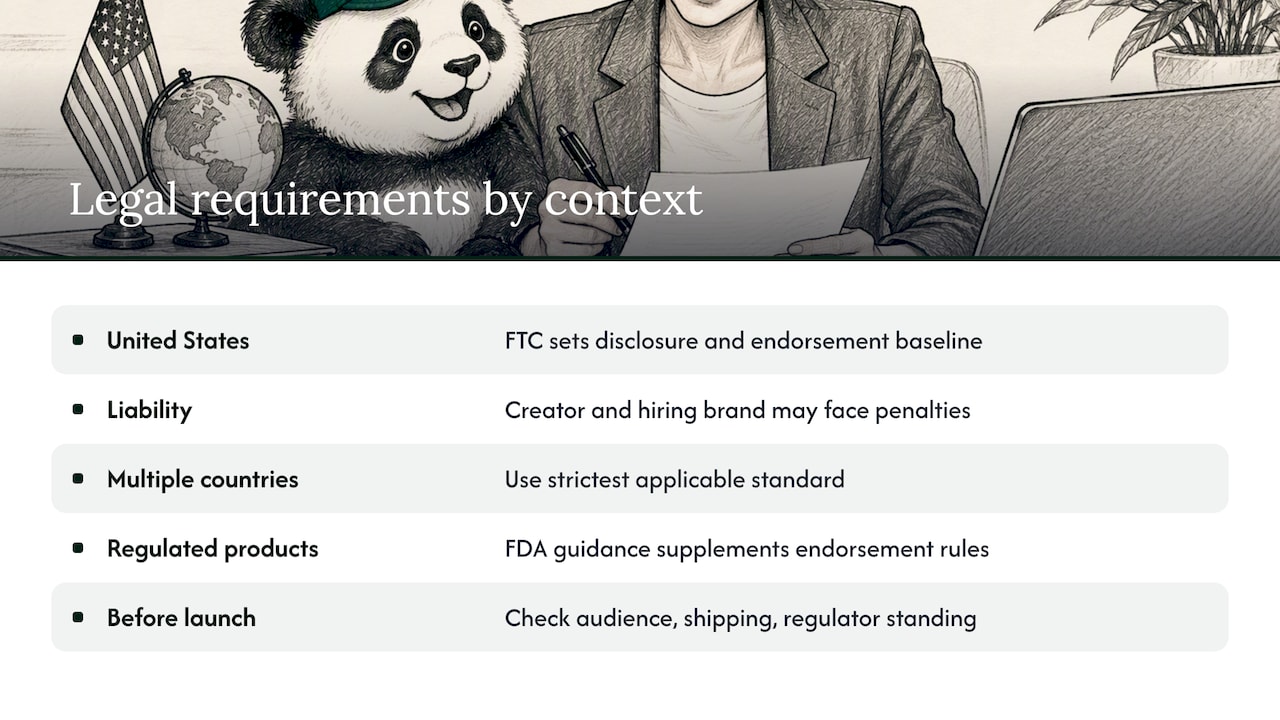
Enforcement does not look the same everywhere, and that gap is where brands get caught off guard. In the United States, the FTC’s advertising and marketing guidance sets the baseline for disclosure requirements and endorsement rules, and penalties can apply to both the creator and the brand that hired them. The TruHeight case shows that regulators now pursue the advertiser directly when fake engagement is involved, not just the platform or the bot operator.
Other jurisdictions apply different standards for what counts as a material connection, how disclosure must be worded, and who bears liability when a creator fails to disclose. A campaign running across multiple countries needs contract language flexible enough to meet the strictest applicable standard, rather than defaulting to the rules of wherever the brand happens to be headquartered. Regulated industries add another layer: where product claims are involved, FDA advertising and promotion guidance applies on top of general endorsement rules, and a creator’s casual claim about efficacy can create liability that a generic disclosure clause does not cover.
The practical takeaway is to treat jurisdiction as a vetting variable, not an afterthought. Know where your creator’s audience sits, where your product ships, and which regulator has standing before a campaign goes live, not after a complaint arrives.
Case studies of brand safety failures and recoveries in influencer marketing
Fake engagement is not a fringe problem. With 37.2% of influencer followers showing signs of being fake or inauthentic, a brand that skips vetting is statistically likely to pay for an audience that does not exist. The TruHeight case is the clearest recent example of what failure costs: a $4 million FTC judgment tied directly to bot-operated profiles used to manufacture apparent endorsements.
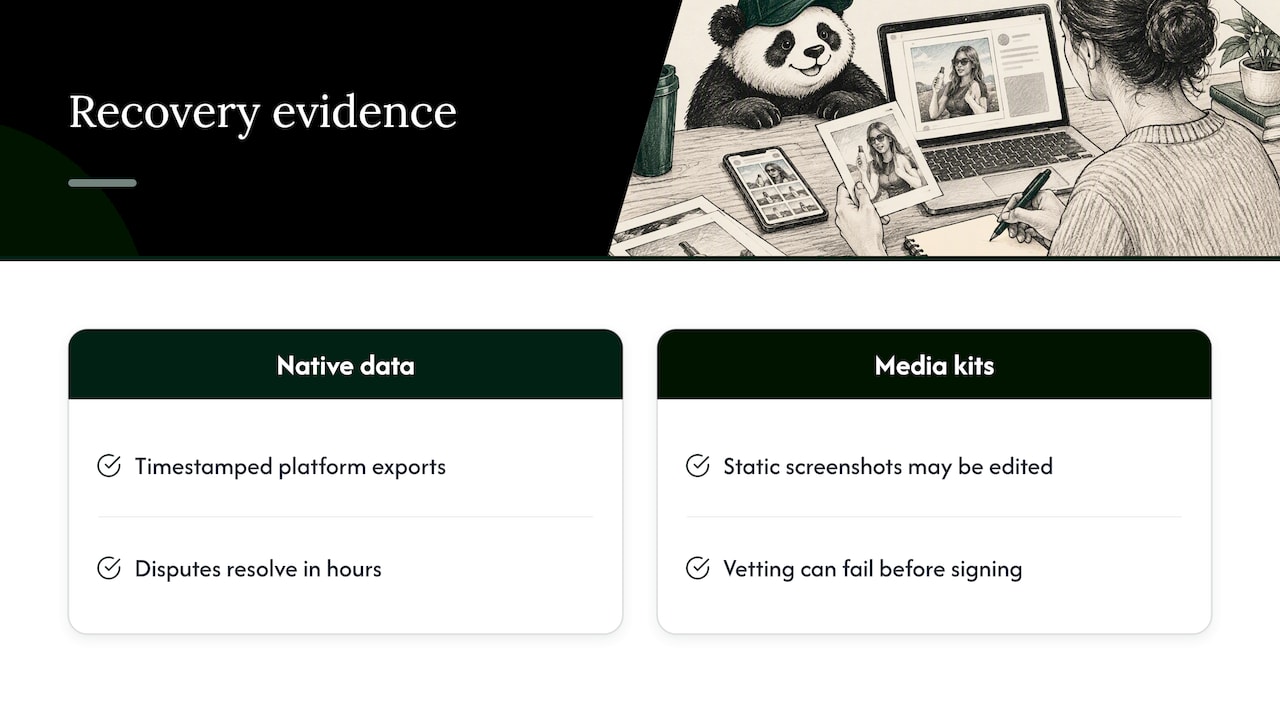
Recovery in these situations tends to follow a consistent pattern: immediate takedown of the offending content, a public correction where the claim was factual rather than tonal, and a contract audit to find how the vetting process missed the warning signs. Brands that recover fastest are the ones that already had a native-analytics paper trail. When engagement numbers are backed by timestamped, platform-exported data rather than a creator-supplied screenshot, a dispute over what actually happened resolves in hours instead of weeks.
The brands that struggle longest are usually the ones relying on media kits alone. As one industry analysis on media kit risk points out, static screenshots can be edited before they ever reach a brand’s inbox, which means the vetting failure often happened at the very first step, before the contract was even signed.
Training internal teams on brand safety awareness in influencer collaborations
A scorecard and a monitoring dashboard only work if the people using them know what the numbers mean. Marketing teams need a shared vocabulary: what counts as a risk flag, what triggers escalation, and who owns the decision when a creator’s score drops mid-campaign.
Practical training starts with the same three indicators used in vetting: comment quality, engagement anomaly, and follower growth pattern. Walk the team through real flagged examples so they recognize the pattern before an automated alert ever fires. Pair that with a short session on disclosure language, so whoever reviews creator content before it posts knows what compliant endorsement copy actually looks like under FTC guidance.
Cross-functional training matters as much as marketing-specific training. Legal needs to understand reach and risk thresholds well enough to respond fast when an escalation lands on their desk, and PR needs visibility into the brand-suitability framework before a crisis, not during one. Build a recurring refresher, quarterly is reasonable, since platform behavior and fraud tactics shift faster than most training calendars account for.
Partnership over punishment: a note on long-term creator relationships
Vetting works best as the start of a relationship, not a one-time gate. Creators who understand your brand’s risk thresholds upfront, through clear contracts and honest conversation, rarely become the source of an incident. The friction usually comes from ambiguity, not bad intent.
Authenticity and control are not opposites. The clearest agreements protect both.
— Kalle
How Align TCC helps you build this into a program
We turn the checklist above into a running system, not a one-time project. Our Influencer & Creator Marketing service builds the scorecard and vetting workflow; contract terms and disclosure language come out of the same engagement.

AI-aware monitoring and triage rules built around your brand’s sensitivity level
Crisis escalation planning before you need it, not after
Copy-ready contract clauses and disclosure review
If you want a pilot with a small creator cohort before committing further, our services page is the place to start that conversation.
FAQ
Are influencers trustworthy?
Trustworthiness varies by individual creator and cannot be assumed from follower count alone. Comment quality and engagement-anomaly analysis are the most reliable ways to verify a specific creator before you rely on them.
Who are the top 10 influencers?
Rankings shift constantly by platform, niche, and region, and no single authoritative list applies across industries. A more useful question for brand safety purposes is whether a specific creator’s audience is authentic and relevant to your buyers, which a vetting scorecard answers directly.
What is influencer syndrome?
The term is not a recognized industry or clinical definition, so treatment of it varies across sources. If you encounter the phrase, it is generally used informally to describe creators whose public persona diverges from their private conduct, which is exactly what reference checks and ongoing monitoring are designed to catch.
What are some examples of influencers that promote brands?
Creators across every platform and follower tier promote brands, from nano-influencers with a few thousand highly engaged followers to macro-tier accounts with hundreds of thousands. What matters for brand safety is not the tier itself but whether that specific creator clears a comment-quality, engagement-anomaly, and native-analytics check before a contract is signed.
Sources
Recommended
RELATED INSIGHTS



LET’S TALK
What are you trying to grow next?
Brand, launch, market entry or performance. Book 30 minutes and tell us what you’re working on.